Identity and Capitalism by Marie Moran
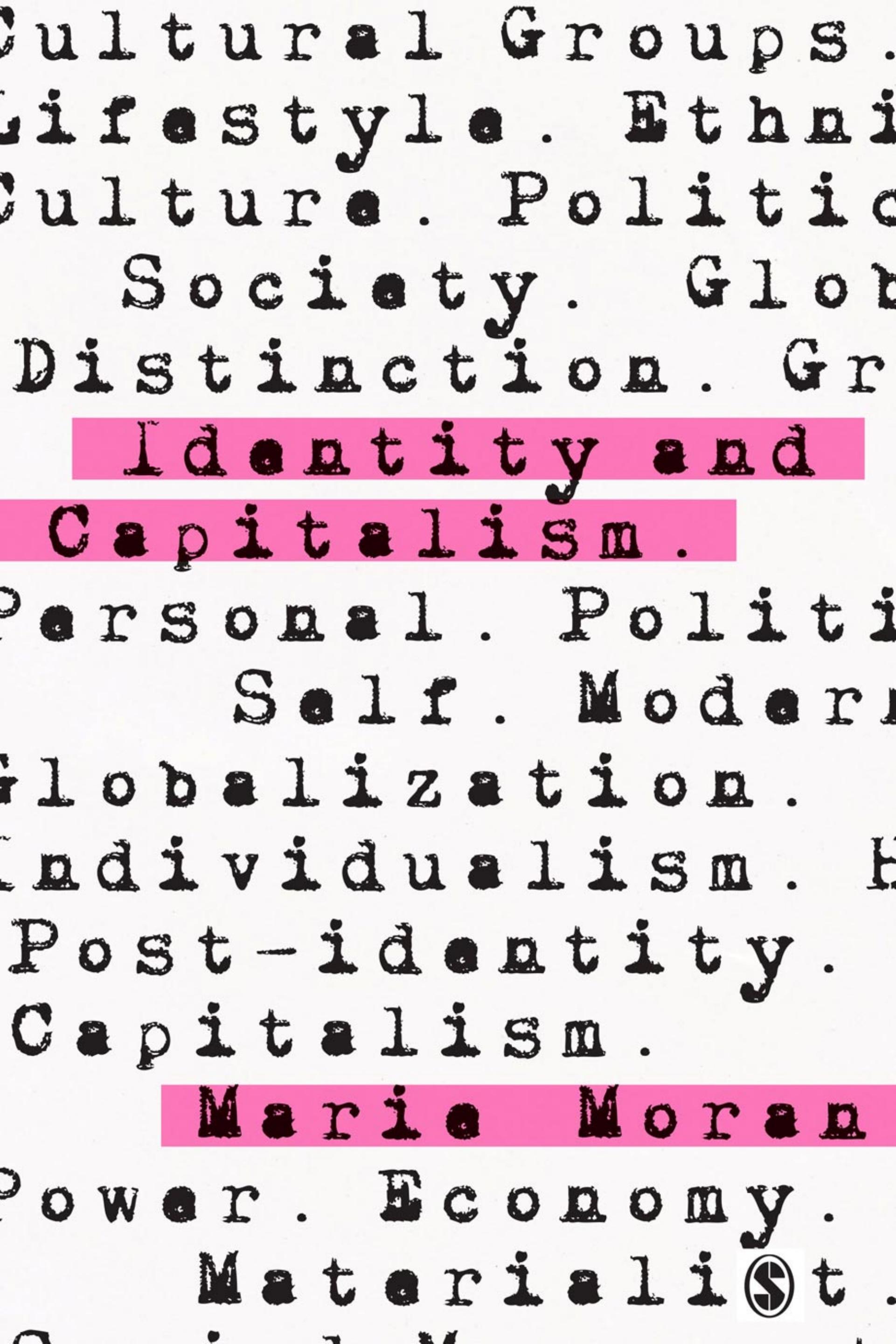
Author:Marie Moran
Language: eng
Format: epub, pdf
Publisher: SAGE Publications
Published: 2014-09-26T16:07:47.590000+00:00
Culture and the appreciation of difference
Important new ‘cultural’ understandings of selfhood and groups can be traced to the work of Margaret Mead, Franz Boas and other anthropologists who, in the early twentieth century, started to explain social differences in terms of cultural constraints and influences. These cultural understandings differed from the psychological accounts of difference, for rather than emphasise individual differences, they emphasised group differences, and in the process, ended up emphasising similarities among the group members. But these accounts also challenged the biologically essentialist view of selves and groups, for though these culturally demarcated groups often mapped onto the older biologically demarcated groups, this time it was shared ‘cultural’ experiences, traditions, ways of living and ways of being that marked people out as members of a particular group, rather than ‘hereditary’ type, bodily function or skin colour. Even as these accounts did not rely on biological markers, they can nonetheless be considered essentialist in the sense of attributing to all members of the group certain properties which make them, by virtue of those properties, members of that group. Again, we can see here how the concept of identity, with its original connotations of sameness and oneness, would finally emerge as a useful way of capturing this experience of being part of such a culturally formed group. Discussing these same authors, Mackenzie posits, ‘I do not think the cultural anthropologists used the word “identity” in a technical sense until Erikson made it popular: but perhaps it is fair to foist it on them … because one of their primary methodological assumptions was that a culture was unique, consistent and binding’ (1978: 41). Furthermore, Erikson himself acknowledges his reliance on the insights of these cultural anthropologists, stating in Childhood and Society that ‘it would be impossible for me to itemize my over-all indebtedness to Margaret Mead’ (1950: 13). Indeed, as Gleason carefully observes, ‘Erikson knew and admired Margaret Mead’s work on the American character’, and even figured out his ideas on the relationship between ‘ego identity’ and ‘group identity’ during his time working alongside her (1983: 925). This further demonstrates the co-evolution of the psychological and cultural conceptions of self- and grouphood that would ultimately culminate in the concept of identity.
Once again, even before the explicit emergence of the concept of identity to capture these ideas, we can see how these culturalist ideas of self- and grouphood might have offered a more positive alternative for self-conceptualisation than the biological accounts they displaced – and even the psychological accounts they coexisted with. The trajectory of development of the category of culture over the course of the twentieth century – as traced by Williams (1981a, 1983, 1989 [1958]), who saw in this conceptual evolution a key insight into broader social shifts taking place in democratic societies4 – was such that it moved away from elitist conceptions of ‘civilisation’ and ‘high culture’, to signify the meaningful practices of everyday life. This understanding of ‘culture’ persisted in and animated the notion of individual ‘cultures’, where
Download
This site does not store any files on its server. We only index and link to content provided by other sites. Please contact the content providers to delete copyright contents if any and email us, we'll remove relevant links or contents immediately.
| Anthropology | Archaeology |
| Philosophy | Politics & Government |
| Social Sciences | Sociology |
| Women's Studies |
Cecilia; Or, Memoirs of an Heiress — Volume 1 by Fanny Burney(32558)
The Great Music City by Andrea Baker(32018)
Cecilia; Or, Memoirs of an Heiress — Volume 2 by Fanny Burney(31956)
Cecilia; Or, Memoirs of an Heiress — Volume 3 by Fanny Burney(31941)
We're Going to Need More Wine by Gabrielle Union(19046)
All the Missing Girls by Megan Miranda(16023)
Pimp by Iceberg Slim(14506)
For the Love of Europe by Rick Steves(14121)
Bombshells: Glamour Girls of a Lifetime by Sullivan Steve(14073)
Talking to Strangers by Malcolm Gladwell(13370)
Norse Mythology by Gaiman Neil(13363)
Fifty Shades Freed by E L James(13239)
Mindhunter: Inside the FBI's Elite Serial Crime Unit by John E. Douglas & Mark Olshaker(9339)
Crazy Rich Asians by Kevin Kwan(9291)
The Lost Art of Listening by Michael P. Nichols(7506)
Enlightenment Now: The Case for Reason, Science, Humanism, and Progress by Steven Pinker(7311)
The Four Agreements by Don Miguel Ruiz(6765)
Bad Blood by John Carreyrou(6621)
Weapons of Math Destruction by Cathy O'Neil(6279)
